There’s a moment many families reach: a parent is getting older, and the question of “what kind of care do they need?” comes up. It’s easy to focus on the practical side of home care — meals, medications, safety. But some of the most important benefits of in-home senior care aren’t practical at all. They’re emotional. And they matter just as much as anything on a checklist.
Home Isn’t Just a Place
Ask most older adults where they want to grow old, and the answer is overwhelmingly the same: right where they already are. A 2024 AARP national survey found that 75% of adults 50 and older want to stay in their current homes, and 73% hope to remain in their communities as they age.
That’s not stubbornness. It’s psychology. Home holds routines, memories, and a sense of control that’s hard to replicate anywhere else. Aging in place works because it brings the support to the person instead of asking the person to leave everything familiar behind — and that’s the whole premise behind quality senior home care.
The Real Risk: Loneliness
Aging in place only works, though, if it doesn’t mean aging alone. And that’s a real risk. The National Institute on Aging reports that about 28% of older adults in the U.S. — roughly 13.8 million people — live alone, putting them at elevated risk for isolation.
That risk isn’t just a quality-of-life issue. It’s a health issue. According to a National Academies of Sciences report, social isolation carries a mortality risk comparable to other major factors like high blood pressure, smoking, or obesity. In other words, loneliness doesn’t just feel bad. It can shorten lives.
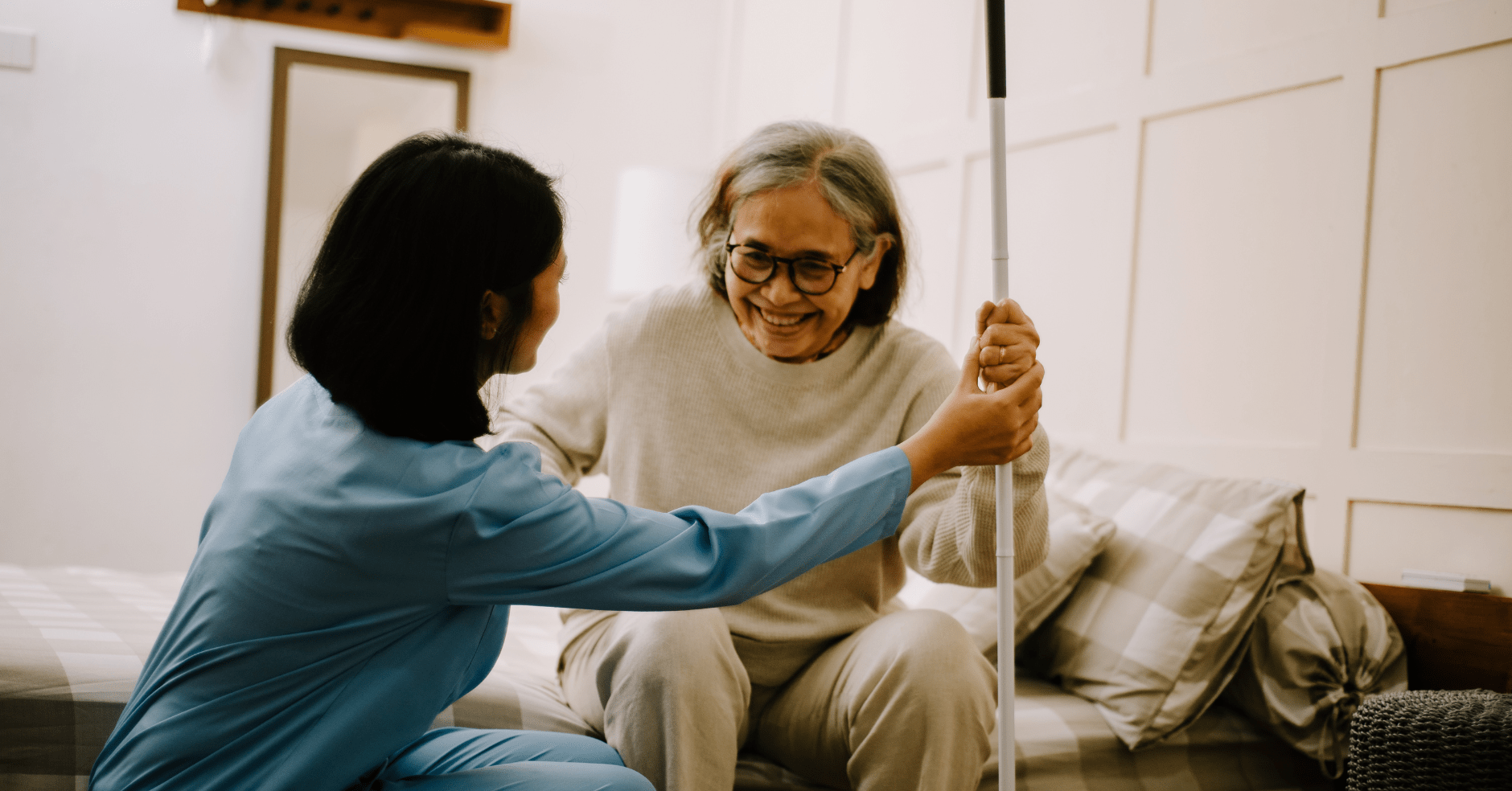
This is where companion care earns its keep emotionally: a caregiver who shows up regularly, has real conversations, and builds a relationship over time is directly addressing one of the biggest hidden health risks of aging.
What the Research Says About Mood and Setting
It’s not just theory. A peer-reviewed study of adults over 65 used validated clinical scales to compare emotional health across settings, and found that compared with elderly people living in their own homes, those in nursing homes reported lower self-esteem and higher levels of both depression and anxiety.
Researchers pointed to a specific driver: the loss of autonomy that often comes with institutional living. Facing a move into a facility can trigger real psychological strain and a sense of losing control over one’s own life. Private duty home care sidesteps that entirely. Seniors keep their independence, their routines, and their say over daily decisions — all while still getting the support they need.
(Worth noting: not every study agrees on every point — some find certain depression rates lower in structured facility settings, likely due to built-in social programming. The honest takeaway isn’t “home always wins automatically” — it’s that consistent, quality connection is what protects emotional health, wherever it happens. Good in-home care is specifically designed to provide that connection.)
Why This Matters for Families
The emotional upside isn’t limited to the person receiving care. When a professional caregiver handles the day-to-day tasks, family members are freed up to just… be family. Visits stop being about logistics and start being about actually spending time together. That shift is subtle, but it changes the tone of the relationship from caretaking to connection.
Home Care in Pinellas, Hillsborough, and Pasco Counties
For families across the Tampa Bay area, finding the right fit matters as much as the decision itself. Bayshore Home Care has spent more than 40 years providing home care in Pinellas County, home care in Hillsborough County, and home care in Pasco County, helping older adults age in place with dignity while giving families genuine peace of mind.
Frequently Asked Questions
What is aging in place? Aging in place means remaining safely and comfortably in your own home as you grow older, with the support needed to maintain independence.
Can home care reduce loneliness? Yes. Companion care provides regular social interaction, conversation, and emotional support that can help reduce isolation and improve overall well-being.
Is home care only for seniors with medical needs? No. Many older adults benefit from non-medical home care — companionship, meal preparation, transportation, light housekeeping, medication reminders, and help with daily activities.
The Bottom Line
In-home senior care isn’t just a logistical solution — it’s an emotional one too. It lets people stay where they feel most like themselves, while directly countering the isolation that puts so many older adults at risk. The data backs up what most families sense intuitively: comfort, familiarity, and real human connection aren’t a bonus to good care. They’re the point of it.
If your loved one has become more isolated, is struggling with daily tasks, or could simply benefit from a little extra companionship, don’t wait for a crisis before exploring your options. A few hours of compassionate support each week can make all the difference in helping someone remain safe, independent, and happy at home.